Calgary winters aren’t pretty! When temperatures drop as low as -30°C or colder, your pipes are in trouble. Yes, frozen pipes are inconvenient. If they burst, they can flood your home and cause thousands of dollars in damage. Worst case scenario? It happens when you’re not home to catch it.
The team at Mr. Mike’s Plumbing sees this problem every winter. Frozen pipe emergencies in Calgary are no joke. Luckily, they are easily preventable. That’s why we put together this guide to show how to protect your pipes before winter has its way with them.
Table of Contents
ToggleWhy Frozen Pipes Are a Big Problem
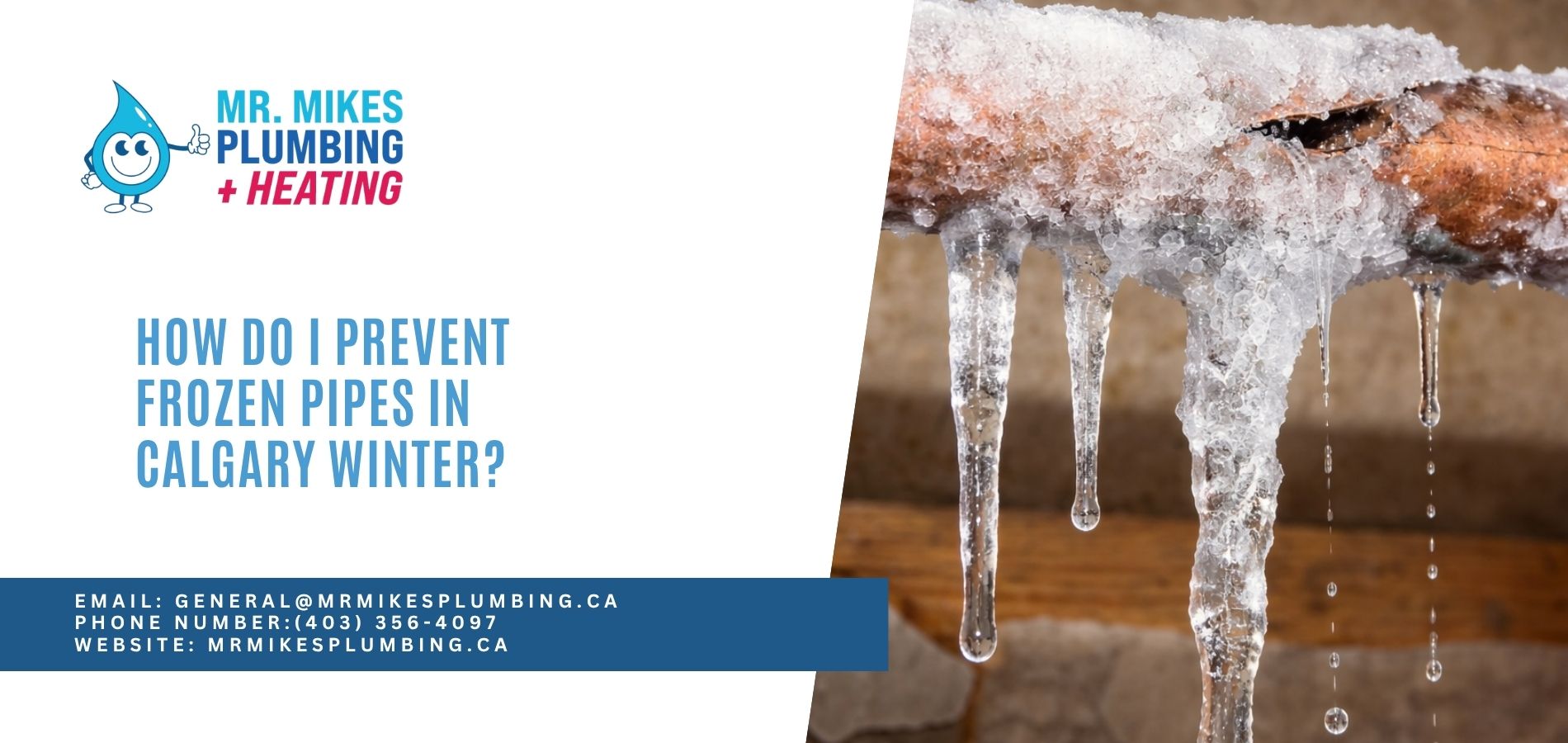
When water freezes, it expands. This puts pressure on your pipes and it doesn’t matter whether they’re metal or plastic. When the pressure gets too high, the pipe will crack or burst.
Unfortunately, the burst doesn’t usually happen where the ice is. Instead, it happens between the ice blockage and your faucet due to the pressure buildup. That makes it hard to notice since you likely won’t see it until the ice thaws and water starts pouring into your walls, ceilings and basement.
A single burst pipe can release thousands of gallons of water into your home in a couple of hours. Think about it. You’ll end up dealing with damaged drywall, ruined flooring, destroyed furniture and in some cases, mold growth. Insurance claims from frozen pipe damage can average $5,000 to $10,000, but can often exceed $50,000 in severe cases.
Which Pipes Are Most at Risk?
Not all pipes freeze the same. When it comes to preventing freezing, focus our prevention efforts on:
Exterior Walls
Pipes running through exterior walls have much less insulation protecting them from the cold. They are your highest risk pipes .
Unheated Spaces
Basements, crawl spaces, attics and garages aren’t heated. This causes these pipes to freeze quickly when temperatures drop.
Outdoor Hose Bibs and Sprinkler Lines
These pipes are directly exposed to the elements. Without proper winterization, they will freeze.
Kitchen and Bathroom Sinks on Outer Walls
If your kitchen or bathroom is on an exterior wall, pipes under the sink are more vulnerable. This is especially true if they are inside a cabinet against the outside wall.
Pipes in Unoccupied Homes
Own a vacation property or second home? If you turn the heat down or off entirely, your pipes are more vulnerable to freezing.
How to Prevent Frozen Pipes
Preventing frozen pipes in the first place is cheaper than dealing with burst pipes later. Here are some tips:
Insulate Your Pipes
Insulating pipes is relatively inexpensive and requires minimal labour. Prioritize pipes in unheated spaces such as basements, crawl spaces and garages. Foam pipe sleeves are great and only cost a few dollars per section. Add heat tape or heat cables to extremely cold areas for additional protection.
Seal Cracks and Openings
Cold air can get into your home through cracks around pipes when they get through exterior walls. Use caulk or spray foam insulation to seal these gaps. Look for these in the basement, crawl space or spaces where pipes penetrate walls.
Keep Your Home Heated
Your thermostat should never be below 15°C, even when you’re away. Yes, heating an empty house costs money, but you’ll pay a lot more to fix burst pipes than heating. Set your thermostat to the same temperature at all hours of the day during extreme cold spells.
Open Cabinet Doors
When temperatures plummet to below -20°C, open cabinet doors under sinks on exterior walls. This will let warm air from your home circulate around the pipe, which makes a huge difference.
Let Faucets Drip
Running water is less likely to freeze than standing water. When a cold snap is forecast, let faucets on exterior walls drip. Keeping water moving through the pipes relieves pressure if ice starts to form.
Disconnect and Drain Outdoor Hoses
Before the first freeze, disconnect garden hoses and drain them. Store them indoors if possible as water left in a hose can freeze and expand back into your home’s plumbing.
Shut Off and Drain Outdoor Faucets
Usually Calgary homes have shut-off valves inside for outdoor hose bibs. Close the valves, then go outside and open the outdoor faucet to ensure any remaining water drains. Leave the outdoor faucet open all winter.
Insulate Your Garage
If you have water lines running through your garage, try to keep the garage door closed as much as possible. Consider adding insulation to the garage walls if pipes run through them.
Add Extra Insulation in Crawl Spaces or Attics
Poor insulation in these areas lets cold air reach your pipes. Add insulation to protect your pipes and reduce your heating bills.
Don’t Let Winter Catch You Off Guard
How do you prevent frozen pipes in Calgary during the winter? Insulate your pipes, seal openings, heat your home, let faucets drip during cold snaps and winterize outdoor plumbing. While these steps may seem simple, they can save you thousands of dollars in damage. At Mr. Mike’s Plumbing, we’re here to help you prepare for winter and respond when emergencies happen. If your pipes do freeze, our frozen pipe plumbers in Calgary are always ready to help.
Need help winterizing your plumbing or dealing with frozen pipes? Contact us for a quote today!